
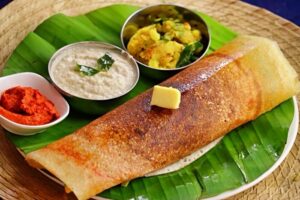
Dosa, a beloved South Indian dish, is a thin, crispy pancake made from a fermented batter of rice and urad dal (black gram lentils). It is a versatile dish enjoyed at breakfast, lunch, or dinner, and can be paired with a variety of chutneys and sambar. Making dosa at home might seem daunting, but with a bit of patience and practice, you can master this delicious dish. Here’s a step-by-step guide to making dosa.
Ingredients
For the Dosa Batter:
- 2 cups of rice (preferably idli rice or parboiled rice)
- 1/2 cup of urad dal (split black gram lentils)
- 1/4 cup of poha (flattened rice)
- 1 teaspoon fenugreek seeds (methi seeds)
- Salt to taste
- Water as needed
For Cooking the Dosa:
- Oil or ghee for cooking
- Water for adjusting the consistency
Instructions
Preparing the Batter
- Rinse and Soak: Rinse the rice thoroughly in water until the water runs clear. In a separate bowl, rinse the urad dal and fenugreek seeds. Soak the rice, urad dal, and fenugreek seeds in water for at least 4-6 hours. Soak the poha in water for about 30 minutes before blending.
- Blending: Drain the soaked rice, urad dal, fenugreek seeds, and poha. In a blender, first grind the urad dal and fenugreek seeds with a little water to make a smooth batter. Transfer this batter to a large mixing bowl. Next, grind the rice and poha with water until smooth. Combine the rice batter with the urad dal batter in the mixing bowl.
- Fermentation: Add salt to the batter and mix well. Cover the bowl with a cloth or lid and let it ferment in a warm place for 8-12 hours or overnight. The batter should rise and become slightly frothy.
Making the Dosa
- Prepping the Pan: Heat a non-stick or cast-iron skillet over medium heat. To check if the pan is ready, sprinkle a few drops of water on it; the water should sizzle and evaporate quickly. Lightly grease the pan with oil or ghee.
- Spreading the Batter: Stir the fermented batter gently. Pour a ladleful of batter onto the center of the hot pan. Using the back of the ladle, spread the batter in a circular motion from the center outwards to form a thin, even circle.
- Cooking: Drizzle a little oil or ghee around the edges and on top of the dosa. Cook until the edges start to lift and the bottom turns golden brown and crispy. This should take about 2-3 minutes. If you prefer a softer dosa, cover the pan with a lid while cooking.
- Serving: Fold the dosa in half or roll it into a cylinder and serve hot. Dosas are typically served with coconut chutney, sambar, or a variety of other chutneys.
Tips for Perfect Dosa
- Consistency of the Batter: The batter should be thick but pourable. If it’s too thick, add a little water to reach the right consistency.
- Fermentation: The temperature plays a crucial role in fermentation. In cooler climates, you can place the batter in a warm oven (with the oven light on) to aid fermentation.
- Seasoning the Pan: For a non-stick surface, ensure the pan is well-seasoned. Rub a cut onion or potato on the hot pan before making each dosa to prevent sticking.
Variations
- Masala Dosa: Fill the dosa with a spiced potato filling for a popular variation.
- Set Dosa: Make thicker, softer dosas by pouring a thicker layer of batter and not spreading it too much.
- Rava Dosa: Use semolina (rava) instead of rice for a quick, instant dosa that doesn’t require fermentation.
Making dosa at home is a rewarding process that brings the authentic taste of South India to your kitchen. With practice, you can perfect the art of dosa-making and enjoy this delightful dish whenever you crave it.

The creator behind this blog, and I’m thrilled to share my passion for vegetarian cooking with you.
Cooking has always been a joyful journey for me, filled with vibrant flavors, wholesome ingredients, and the creativity that comes with crafting delicious meals.
Growing up in a family where food was at the heart of every celebration, I learned the art of cooking from my mother and grandmother. Their recipes, steeped in tradition and love, inspired me to explore and experiment in the kitchen. Over the years, I’ve developed my own unique style, blending traditional and contemporary flavors to create vegetarian dishes that are both nutritious and delightful.