
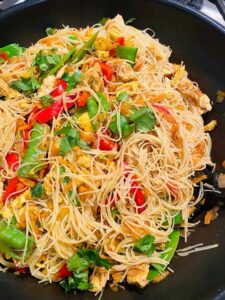
Singapore noodles, despite their name, are more closely associated with Chinese cuisine and are particularly popular in Western Chinese restaurants. This delightful dish is a medley of thin rice vermicelli noodles stir-fried with a variety of vegetables and seasoned with a flavorful curry powder. The following recipe provides a step-by-step guide to making delicious vegetarian Singapore noodles at home.
Ingredients:
For the Noodles:
- 200 grams of thin rice vermicelli noodles
- 2 tablespoons of oil (vegetable or sesame oil)
For the Stir-Fry:
- 1 medium onion, thinly sliced
- 3-4 garlic cloves, minced
- 1-inch piece of ginger, finely chopped
- 1 red bell pepper, thinly sliced
- 1 yellow bell pepper, thinly sliced
- 1 carrot, julienned
- 100 grams of cabbage, thinly sliced
- 100 grams of bean sprouts
- 2-3 green onions, chopped
- 1/2 cup frozen peas (optional)
For the Sauce:
- 2 tablespoons soy sauce
- 1 tablespoon curry powder
- 1 tablespoon vegetarian oyster sauce or hoisin sauce
- 1 tablespoon chili sauce (adjust to taste)
- 1/2 teaspoon sugar
- Salt and pepper to taste
Instructions:
Step 1: Prepare the Noodles
- Soak the Noodles: Place the rice vermicelli noodles in a large bowl. Pour hot water over the noodles, ensuring they are fully submerged. Let them soak for about 5-7 minutes or until they are soft but still slightly firm (al dente). Drain the noodles and rinse them with cold water to stop the cooking process. Set aside.
Step 2: Prepare the Sauce
- Mix the Sauce: In a small bowl, combine the soy sauce, curry powder, vegetarian oyster sauce (or hoisin sauce), chili sauce, and sugar. Mix well and set aside.
Step 3: Stir-Fry the Vegetables
- Heat the Oil: In a large wok or frying pan, heat the oil over medium-high heat.
- Cook the Aromatics: Add the minced garlic and chopped ginger to the hot oil. Stir-fry for about 30 seconds until fragrant.
- Add the Onion: Add the sliced onion to the wok and stir-fry for about 2 minutes until it becomes translucent.
- Add the Vegetables: Add the sliced bell peppers, carrot, and cabbage to the wok. Stir-fry for about 3-4 minutes until the vegetables are tender but still crisp.
Step 4: Combine Noodles and Vegetables
- Add the Noodles: Add the soaked and drained noodles to the wok. Using tongs or chopsticks, gently toss the noodles with the vegetables to combine.
- Add the Sauce: Pour the prepared sauce over the noodles and vegetables. Continue to toss and stir-fry until the noodles are evenly coated with the sauce and heated through.
- Add Bean Sprouts and Green Onions: Add the bean sprouts and chopped green onions to the wok. Stir-fry for another 1-2 minutes until everything is well mixed and heated.
Step 5: Serve
- Taste and Adjust: Taste the noodles and adjust the seasoning with salt and pepper if needed.
- Plate and Serve: Transfer the Singapore noodles to a serving dish. Serve hot, garnished with additional green onions if desired.
Tips for the Perfect Singapore Noodles
- Noodle Texture: Ensure the noodles are not over-soaked. They should be slightly firm to avoid becoming mushy during stir-frying.
- Vegetable Variety: Feel free to use any vegetables you like or have on hand. Snap peas, broccoli, and mushrooms can also be great additions.
- Spice Level: Adjust the amount of chili sauce to your taste preference. If you prefer a milder dish, reduce the chili sauce or omit it altogether.
Enjoy your homemade veg Singapore noodles, a vibrant and flavorful dish that’s sure to become a favorite in your household!

The creator behind this blog, and I’m thrilled to share my passion for vegetarian cooking with you.
Cooking has always been a joyful journey for me, filled with vibrant flavors, wholesome ingredients, and the creativity that comes with crafting delicious meals.
Growing up in a family where food was at the heart of every celebration, I learned the art of cooking from my mother and grandmother. Their recipes, steeped in tradition and love, inspired me to explore and experiment in the kitchen. Over the years, I’ve developed my own unique style, blending traditional and contemporary flavors to create vegetarian dishes that are both nutritious and delightful.