
Introduction
Ghavar, also known as Ghewar, is a traditional Rajasthani sweet that is often prepared during festivals like Teej and Raksha Bandhan. This honeycomb-like disc of fried dough is soaked in sugar syrup, resulting in a delectable and crispy dessert. Making ghavar at home may seem daunting due to its intricate texture and frying technique, but with a bit of patience and the right ingredients, it’s quite achievable. Here’s a step-by-step guide to creating this festive delight.
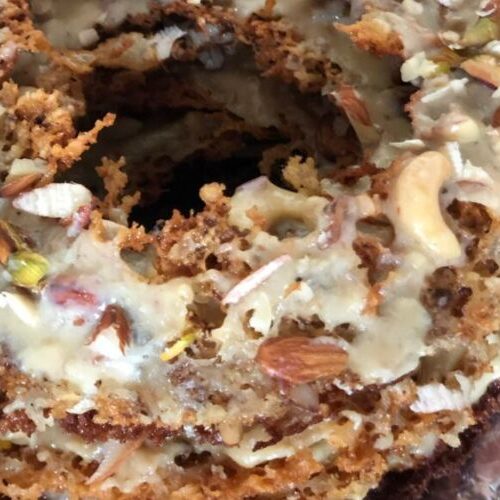
How to Make Ghavar: A Delicious Indian Sweet Treat
Ingredients
For the Ghavar:
- 1 cup all-purpose flour (maida)
- 1/4 cup clarified butter (ghee), melted
- 1/4 cup cold milk
- 1 cup chilled water
- 1 cup ice cubes
- Ghee or oil, for frying
For the Sugar Syrup:
- 1 cup sugar
- 1/2 cup water
- 1/4 teaspoon cardamom powder
- A few saffron strands (optional)
For Garnish:
- Chopped nuts (almonds, pistachios)
- Silver varak (edible silver foil)
- Rose petals (optional)
Instructions
Prepare the Batter:
- In a large mixing bowl, combine the all-purpose flour and melted ghee. Mix until you achieve a crumbly texture.
- Gradually add the cold milk to the mixture and mix well.
- Slowly incorporate the chilled water while stirring continuously to avoid lumps. The batter should be of pouring consistency, similar to pancake batter.
- Add ice cubes to keep the batter cold and let it rest for 30 minutes.
Make the Sugar Syrup:
- In a saucepan, combine the sugar and water. Heat over medium flame, stirring occasionally until the sugar dissolves completely.
- Once the sugar dissolves, let the syrup boil until it reaches a one-string consistency (when a drop of syrup is stretched between two fingers, it forms a single thread).
- Add cardamom powder and saffron strands (if using). Mix well and keep aside.
Frying the Ghavar:
- In a deep, heavy-bottomed pan or a kadhai, heat ghee or oil for frying. The oil should be deep enough to allow the batter to spread out and form a disc.
- Pour a ladleful of batter from a height into the hot oil. The batter will sizzle and spread out forming a net-like pattern.
- Allow it to fry until it turns golden brown. Gently press down the center to ensure it cooks evenly.
- Carefully remove the fried ghavar and drain excess oil on a paper towel. Repeat with the remaining batter.
Soaking in Sugar Syrup:
- While the ghavar is still warm, dip it into the prepared sugar syrup, ensuring it is fully coated. Let it soak for a minute and then remove it to a plate.
Garnishing:
- Garnish the sugar-soaked ghavar with chopped nuts and a layer of silver varak. You can also add a few rose petals for a festive touch.
Serving:
- Ghavar is best enjoyed fresh. Serve it as a dessert or a festive treat, and enjoy the crisp, sweet flavors that make it a beloved delicacy.
Notes
- Ensure the batter is cold to get the right texture.
- Maintain the oil at a consistent medium-high temperature to avoid undercooking or burning.
- Be patient and careful while frying, as the intricate shape requires a gentle touch.
Making ghavar at home is a rewarding experience that brings a touch of Rajasthani tradition to your kitchen. Enjoy this sweet treat during festivals or any time you crave something special!

The creator behind this blog, and I’m thrilled to share my passion for vegetarian cooking with you.
Cooking has always been a joyful journey for me, filled with vibrant flavors, wholesome ingredients, and the creativity that comes with crafting delicious meals.
Growing up in a family where food was at the heart of every celebration, I learned the art of cooking from my mother and grandmother. Their recipes, steeped in tradition and love, inspired me to explore and experiment in the kitchen. Over the years, I’ve developed my own unique style, blending traditional and contemporary flavors to create vegetarian dishes that are both nutritious and delightful.