
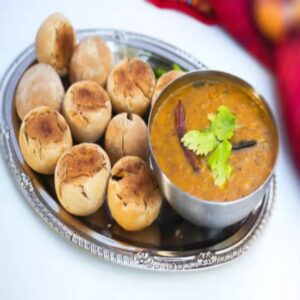
Daal Baati is a quintessential dish from the Indian state of Rajasthan, known for its rich flavors and unique preparation. The combination of crispy, baked wheat balls (baati) and spicy, flavorful lentils (daal) creates a culinary experience that is both hearty and satisfying. Here’s a step-by-step guide to making this delightful dish at home.
Ingredients
For Baati:
- 2 cups whole wheat flour
- 1/2 cup semolina (sooji/rava)
- 1/2 cup ghee (clarified butter)
- 1/4 cup milk
- 1/2 tsp baking powder
- Salt to taste
- Water (as needed for dough)
- Ghee for serving
For Daal:
- 1/2 cup split yellow moong dal
- 1/2 cup split black urad dal
- 1/2 cup split green gram dal
- 1/4 cup split chana dal
- 1/4 cup toor dal (pigeon pea lentils)
- 1 large onion, finely chopped
- 2 tomatoes, finely chopped
- 2-3 green chilies, slit
- 1-inch piece ginger, grated
- 4-5 garlic cloves, finely chopped
- 1 tsp cumin seeds
- 1/2 tsp mustard seeds
- 1/4 tsp asafoetida (hing)
- 1/2 tsp turmeric powder
- 1 tsp red chili powder
- 1 tsp coriander powder
- 1/2 tsp garam masala
- 2 tbsp ghee
- Salt to taste
- Fresh coriander leaves for garnish
Instructions
Preparing the Baati:
- Dough Preparation:
- In a large mixing bowl, combine the whole wheat flour, semolina, baking powder, and salt.
- Add the ghee and mix well until the mixture resembles breadcrumbs.
- Gradually add milk and enough water to form a stiff dough. Knead well until smooth.
- Cover the dough and let it rest for 15-20 minutes.
- Shaping and Baking:
- Preheat your oven to 180°C (350°F).
- Divide the dough into equal-sized balls (about the size of a lime).
- Flatten each ball slightly and place them on a baking tray.
- Bake in the preheated oven for 30-35 minutes or until golden brown, turning them occasionally for even baking.
- Once baked, dip each baati in melted ghee to enhance flavor and keep them soft.
Preparing the Daal:
- Cooking the Lentils:
- Wash all the lentils thoroughly and soak them in water for 30 minutes.
- Drain and transfer the lentils to a pressure cooker.
- Add enough water to cover the lentils, along with a pinch of turmeric and salt.
- Pressure cook for 2-3 whistles until the lentils are soft and mushy. Set aside.
- Tempering the Daal:
- In a large pan, heat the ghee over medium heat.
- Add the cumin seeds, mustard seeds, and asafoetida. Let them splutter.
- Add the chopped onions and sauté until they turn golden brown.
- Add the garlic, ginger, and green chilies, and sauté for a couple of minutes.
- Add the chopped tomatoes and cook until they turn soft and mushy.
- Add the turmeric powder, red chili powder, coriander powder, and garam masala. Mix well.
- Add the cooked lentils to the pan and adjust the consistency with water as needed.
- Simmer for 10-15 minutes to let the flavors meld together.
- Garnish with fresh coriander leaves.
Serving Daal Baati:
- Traditionally, Daal Baati is served with a generous dollop of ghee. Place the baatis on a plate, pour the hot daal over them, and drizzle with more ghee if desired.
- Accompany the dish with sides like green chutney, chopped onions, and lemon wedges for a complete meal.
Tips and Variations
- Smoky Flavor: To add a smoky flavor to the daal, you can infuse it with a ‘dhungar’ method by placing a hot charcoal piece in a small bowl, pouring a bit of ghee over it, and placing the bowl in the daal pot. Cover immediately and let it sit for a few minutes before serving.
- Stuffed Baati: For a variation, you can stuff the baatis with a mixture of spiced mashed potatoes or lentils.
- Healthier Option: For a healthier version, you can bake the baatis without dipping them in ghee.
Enjoy this traditional Rajasthani dish that brings together the rustic charm and rich flavors of India’s royal kitchens.

The creator behind this blog, and I’m thrilled to share my passion for vegetarian cooking with you.
Cooking has always been a joyful journey for me, filled with vibrant flavors, wholesome ingredients, and the creativity that comes with crafting delicious meals.
Growing up in a family where food was at the heart of every celebration, I learned the art of cooking from my mother and grandmother. Their recipes, steeped in tradition and love, inspired me to explore and experiment in the kitchen. Over the years, I’ve developed my own unique style, blending traditional and contemporary flavors to create vegetarian dishes that are both nutritious and delightful.