
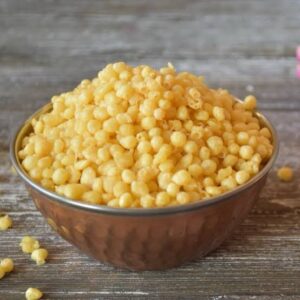
Boondi, small fried droplets made from gram flour batter, is a versatile ingredient used in various Indian dishes like raita, laddoos, and snacks. Making boondi at home is a straightforward process, and with a little practice, you can perfect this delightful addition to your culinary repertoire. Here’s a detailed guide to help you create crispy, delicious boondi at home.
Ingredients:
- 1 cup gram flour (besan)
- 1/2 cup water (adjust as needed)
- 1/4 teaspoon turmeric powder (optional, for color)
- 1/4 teaspoon baking soda (optional, for extra crispiness)
- Salt to taste
- Oil for frying
Equipment:
- Boondi ladle or a perforated spoon
- Deep frying pan
- Mixing bowl
- Whisk
Instructions:
- Prepare the Batter:
- In a mixing bowl, sift 1 cup of gram flour to remove any lumps.
- Gradually add 1/2 cup of water while whisking continuously to form a smooth, lump-free batter.
- Add turmeric powder, baking soda, and salt to taste. Mix well. The batter should be of pouring consistency, neither too thick nor too thin.
- Heat the Oil:
- Pour oil into a deep frying pan and heat it over medium-high flame. To check if the oil is ready, drop a small amount of batter into it. If it sizzles and rises to the surface immediately, the oil is hot enough.
- Make the Boondi:
- Hold the boondi ladle or perforated spoon about 2-3 inches above the hot oil.
- Pour a ladleful of batter onto the perforated spoon and gently tap the edge so that the batter droplets fall into the oil. Do not overcrowd the pan; fry in batches if necessary.
- Fry the boondi until they turn golden and crispy, stirring occasionally to ensure even cooking.
- Drain the Boondi:
- Using a slotted spoon, remove the fried boondi from the oil and place them on a plate lined with paper towels to drain excess oil.
- Cool and Store:
- Allow the boondi to cool completely before using them in recipes or storing them in an airtight container.
Tips for Perfect Boondi:
- Ensure the batter is of the right consistency. Too thick and the boondi will be lumpy; too thin and they will be flat.
- Maintain the oil temperature. If the oil is too hot, the boondi will brown quickly but remain uncooked inside. If it’s too cool, the boondi will absorb more oil and become greasy.
- Use a boondi ladle or perforated spoon specifically designed for making boondi to get uniformly sized droplets.
Variations:
- Sweet Boondi: For a sweet version, you can soak the fried boondi in sugar syrup flavored with cardamom and saffron.
- Spicy Boondi: Add a pinch of red chili powder and chat masala to the batter for a spicy twist.
Boondi is a fun and simple recipe to try at home, offering endless possibilities for experimentation. Whether you use them in savory dishes or sweet treats, homemade boondi is sure to add a delightful crunch to your meals. Enjoy your homemade boondi as a snack or incorporate them into your favorite recipes for an extra layer of texture and flavor!

The creator behind this blog, and I’m thrilled to share my passion for vegetarian cooking with you.
Cooking has always been a joyful journey for me, filled with vibrant flavors, wholesome ingredients, and the creativity that comes with crafting delicious meals.
Growing up in a family where food was at the heart of every celebration, I learned the art of cooking from my mother and grandmother. Their recipes, steeped in tradition and love, inspired me to explore and experiment in the kitchen. Over the years, I’ve developed my own unique style, blending traditional and contemporary flavors to create vegetarian dishes that are both nutritious and delightful.