
Gulab jamun is a beloved Indian dessert known for its soft, spongy texture and rich, sweet flavor. These deep-fried milk-based dough balls soaked in sugar syrup are a staple at celebrations and festive occasions. If you’re looking to recreate this delectable treat at home, here’s a step-by-step guide to help you make perfect gulab jamuns.
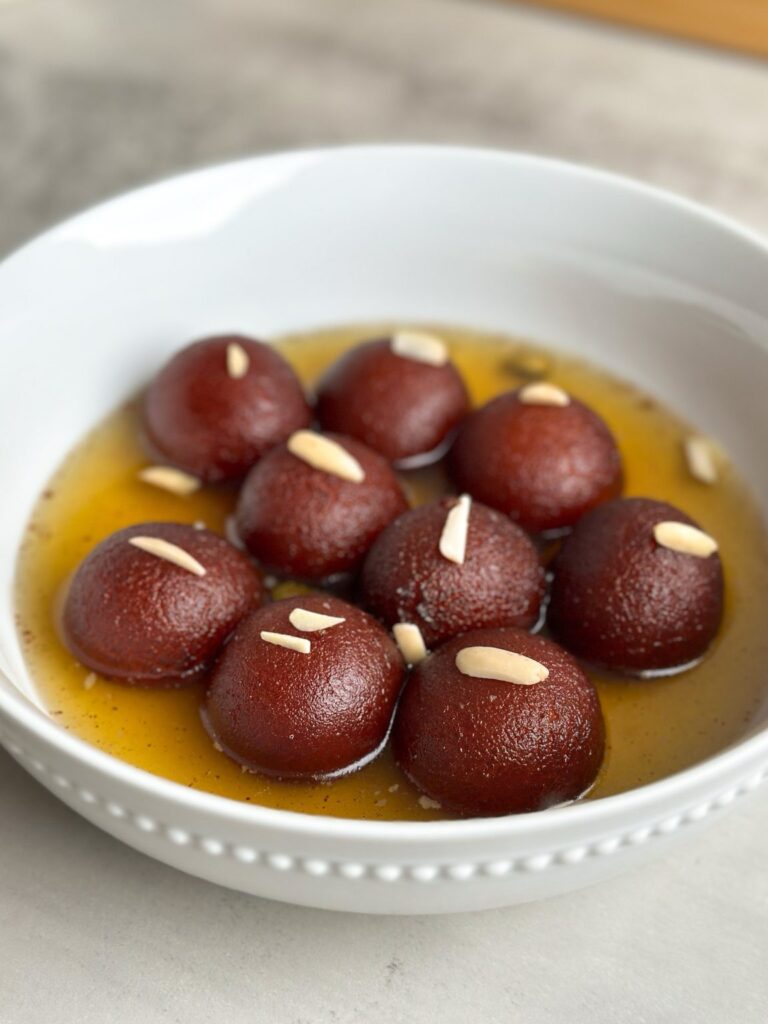
Ingredients
For the Gulab Jamun Dough
- 1 cup khoya (mawa) or milk powder
- 1/4 cup all-purpose flour (maida)
- 1/4 teaspoon baking soda
- 2 tablespoons ghee (clarified butter)
- 2-3 tablespoons milk (as needed to form a dough)
For the Sugar Syrup
- 2 cups sugar
- 1 1/2 cups water
- 4-5 cardamom pods, crushed
- A few strands of saffron (optional)
- 1 teaspoon rose water (optional)
For Frying
- Ghee or oil
Instructions
Preparing the Sugar Syrup
- Combine Ingredients: In a large saucepan, mix the sugar, water, and crushed cardamom pods. If using saffron, add it to the mixture.
- Heat: Bring the mixture to a boil over medium heat, stirring occasionally to dissolve the sugar completely.
- Simmer: Once it reaches a boil, reduce the heat and let it simmer for about 10 minutes until it slightly thickens. The syrup should not be too thick; it should have a consistency similar to honey.
- Add Rose Water: Turn off the heat and add the rose water, if using. Set aside and keep warm.
Making the Gulab Jamun Dough
- Mix Dry Ingredients: In a mixing bowl, combine the khoya, all-purpose flour, and baking soda.
- Add Ghee: Add the ghee to the dry ingredients and mix well until the mixture resembles breadcrumbs.
- Form Dough: Gradually add milk, a tablespoon at a time, and knead the mixture into a soft, smooth dough. The dough should not be too sticky or too dry. Cover the dough with a damp cloth and let it rest for about 10 minutes.
Shaping and Frying the Gulab Jamuns
- Shape Dough Balls: Divide the dough into small, equal-sized portions. Roll each portion between your palms to form smooth, crack-free balls. The size should be smaller than a ping-pong ball as they will expand while frying and soaking in the syrup.
- Heat Oil: In a deep frying pan, heat ghee or oil over medium-low heat. The oil should be hot but not smoking; to test, drop a small piece of dough into the oil. If it rises slowly to the surface, the oil is ready.
- Fry Dough Balls: Carefully slide the dough balls into the hot oil. Fry them in batches, gently stirring to ensure even cooking. Fry until they are golden brown on all sides. This should take about 7-10 minutes per batch.
- Drain: Using a slotted spoon, remove the fried gulab jamuns and drain them on paper towels to remove excess oil.
Soaking in Sugar Syrup
- Soak Gulab Jamuns: While they are still warm, transfer the fried gulab jamuns into the warm sugar syrup.
- Soak Time: Let them soak for at least 1-2 hours, allowing them to absorb the syrup fully and become soft and spongy.
Serving
- Serve Warm or Cold: Gulab jamuns can be enjoyed warm or chilled. Garnish with chopped nuts like pistachios or almonds, if desired.
Tips for Perfect Gulab Jamun
- Smooth Dough: Ensure the dough balls are smooth without cracks to prevent them from breaking while frying.
- Oil Temperature: Fry the gulab jamuns at medium-low heat. If the oil is too hot, the outside will brown too quickly, leaving the inside uncooked.
- Soaking: Make sure the syrup is warm when you add the gulab jamuns. If the syrup is too hot, the gulab jamuns may lose their shape; if it’s too cold, they won’t absorb the syrup well.
Gulab jamun is a delightful dessert that requires some patience and attention to detail. With this recipe, you can create this classic treat at home and enjoy its rich, sweet flavors anytime. Happy cooking!

The creator behind this blog, and I’m thrilled to share my passion for vegetarian cooking with you.
Cooking has always been a joyful journey for me, filled with vibrant flavors, wholesome ingredients, and the creativity that comes with crafting delicious meals.
Growing up in a family where food was at the heart of every celebration, I learned the art of cooking from my mother and grandmother. Their recipes, steeped in tradition and love, inspired me to explore and experiment in the kitchen. Over the years, I’ve developed my own unique style, blending traditional and contemporary flavors to create vegetarian dishes that are both nutritious and delightful.