
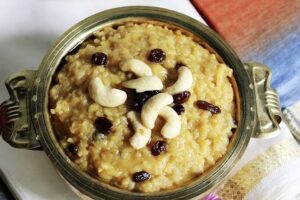
Sweet Pongal, also known as Sakkarai Pongal, is a beloved dish from South India, often made during festivals like Pongal or as a special treat for guests. It’s a creamy, sweet rice dish flavored with jaggery, ghee, and infused with the aroma of cardamom and nuts. Here’s a step-by-step guide to preparing this delicious dessert:
Ingredients:
- 1 cup raw rice (preferably short-grain like Sona Masuri)
- 1/2 cup split yellow moong dal
- 1 cup grated jaggery (adjust according to sweetness desired)
- 4 cups water
- 1/2 cup milk
- 1/4 cup ghee (clarified butter)
- 10-12 cashew nuts
- 1 tbsp raisins
- 1/2 tsp cardamom powder
- A pinch of edible camphor (optional, for aroma)
- A few strands of saffron (optional, for color)
Instructions:
- Prepare the Rice and Dal:
- Wash the rice and moong dal together under running water until the water runs clear. Drain and set aside.
- Cooking the Rice and Dal:
- In a heavy-bottomed pan or pressure cooker, add the washed rice and moong dal along with 4 cups of water and 1/2 cup of milk.
- Cook until the rice and dal are soft and mushy. If using a pressure cooker, cook for about 3 whistles on medium heat. If using a pan, cook covered on medium heat, stirring occasionally to prevent sticking.
- Preparing the Jaggery Syrup:
- While the rice and dal are cooking, prepare the jaggery syrup. In a separate pan, melt the grated jaggery with a little water over low heat until it dissolves completely. Strain to remove impurities if any.
- Combining Rice, Dal, and Jaggery Syrup:
- Once the rice and dal are cooked, add the melted jaggery syrup to the mixture. Mix well and simmer on low heat until the pongal thickens to a creamy consistency.
- Tempering:
- In a small pan, heat ghee. Fry the cashew nuts and raisins until the cashews turn golden and raisins plump up. Remove from heat and add cardamom powder. Optionally, add a pinch of edible camphor and saffron strands for enhanced flavor and aroma.
- Final Mixing:
- Add the tempered ingredients to the cooked pongal mixture. Stir well to combine, ensuring the flavors are evenly distributed.
- Serve Hot:
- Sweet Pongal is traditionally served hot. Enjoy it as is or as a dessert following a meal.
Tips:
- Adjust the sweetness according to your preference by varying the amount of jaggery used.
- The consistency of pongal should be creamy, so adjust the quantity of milk or water accordingly during cooking.
- For a richer flavor, increase the amount of ghee used in tempering.
Conclusion:
Sweet Pongal is not just a dish but a symbol of warmth and hospitality in South Indian culture. Whether prepared during festive occasions or as a gesture of affection, its rich flavors and creamy texture make it a delight for all who taste it. Try this recipe to experience the essence of traditional South Indian cuisine right in your own kitchen!

The creator behind this blog, and I’m thrilled to share my passion for vegetarian cooking with you.
Cooking has always been a joyful journey for me, filled with vibrant flavors, wholesome ingredients, and the creativity that comes with crafting delicious meals.
Growing up in a family where food was at the heart of every celebration, I learned the art of cooking from my mother and grandmother. Their recipes, steeped in tradition and love, inspired me to explore and experiment in the kitchen. Over the years, I’ve developed my own unique style, blending traditional and contemporary flavors to create vegetarian dishes that are both nutritious and delightful.