
Anarsa is a delightful traditional Indian sweet, often prepared during festivals like Diwali. This treat is known for its crispy exterior and soft, slightly grainy interior, made from rice flour and jaggery, and typically garnished with poppy seeds. Making anarsa requires some patience and precision, but the results are truly rewarding. Here’s a step-by-step guide to creating this delicious sweet at home.
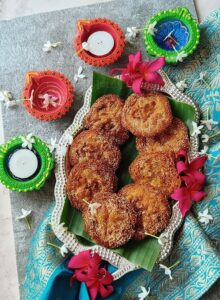
Ingredients:
- 1 cup rice
- 1 cup jaggery (grated)
- 2 tablespoons poppy seeds
- Ghee (clarified butter) for frying
- Water, as needed
Instructions:
- Prepare the Rice Flour:
- Wash the rice thoroughly and soak it in water for at least 3 days. Change the water daily to prevent any sourness.
- After 3 days, drain the water completely and spread the rice on a clean cloth to air dry for a few hours. The rice should be slightly moist, not completely dry.
- Grind the rice into a fine powder using a mixer or a traditional grinding stone. Sieve the flour to ensure it is smooth and fine.
- Make the Dough:
- In a mixing bowl, combine the rice flour with grated jaggery. The ratio should be 1:1, so adjust accordingly if you’re making a larger batch.
- Mix the jaggery and rice flour thoroughly. The moisture from the jaggery should help in forming a dough-like consistency. If needed, add a few drops of water to bring the dough together, but be cautious not to add too much.
- Knead the mixture well to form a smooth, pliable dough. Cover the dough with a damp cloth and let it rest for at least 2-3 hours, or overnight for best results.
- Shape the Anarsa:
- Take small portions of the dough and roll them into balls. Flatten each ball gently into a round, disc-like shape.
- Press one side of each disc onto a plate of poppy seeds, coating it well.
- Fry the Anarsa:
- Heat ghee in a deep frying pan over medium heat. Ensure there’s enough ghee to submerge the anarsa completely.
- Once the ghee is hot, reduce the heat to low-medium. Carefully slide the anarsa, poppy seed side up, into the ghee.
- Fry the anarsa until it turns golden brown, flipping it gently to ensure even cooking on both sides. Be patient, as frying on low heat is essential to cook the anarsa thoroughly without burning.
- Remove the anarsa with a slotted spoon and place it on paper towels to drain any excess ghee.
- Cool and Store:
- Let the anarsa cool completely before serving. This will allow them to firm up and achieve the perfect texture.
- Store the cooled anarsa in an airtight container. They can be kept at room temperature for several days.
Tips for Perfect Anarsa:
- Consistency of the Dough: The dough should be soft but not sticky. If it feels too sticky, add a little more rice flour.
- Frying Temperature: Maintaining the right temperature is crucial. If the ghee is too hot, the anarsa will brown too quickly on the outside while remaining raw inside. Fry them on low-medium heat for even cooking.
- Resting the Dough: Allowing the dough to rest is essential for the flavors to meld and for the anarsa to achieve the right texture.
With these steps, you can create anarsa that is crispy on the outside, soft on the inside, and bursting with traditional flavors. Enjoy making this classic sweet treat, and share it with friends and family during festive occasions!

The creator behind this blog, and I’m thrilled to share my passion for vegetarian cooking with you.
Cooking has always been a joyful journey for me, filled with vibrant flavors, wholesome ingredients, and the creativity that comes with crafting delicious meals.
Growing up in a family where food was at the heart of every celebration, I learned the art of cooking from my mother and grandmother. Their recipes, steeped in tradition and love, inspired me to explore and experiment in the kitchen. Over the years, I’ve developed my own unique style, blending traditional and contemporary flavors to create vegetarian dishes that are both nutritious and delightful.