
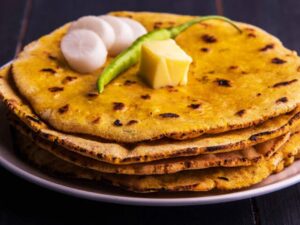
Makka roti, also known as makki di roti, is a traditional Indian flatbread made from cornmeal (maize flour). It’s a staple in Punjabi cuisine and pairs beautifully with sarson ka saag, a spicy mustard greens curry. This gluten-free roti is cherished for its rustic flavor and satisfying texture. Here’s a detailed guide to making this beloved dish at home.
Ingredients:
- 2 cups maize flour (makki ka atta)
- 1/2 teaspoon salt
- Warm water, as needed
- Ghee or clarified butter, for cooking
Optional Additions:
- 1/4 cup whole wheat flour (for easier handling, if desired)
- 1 tablespoon finely chopped fresh coriander leaves
- 1 teaspoon ajwain (carom seeds)
- 1 teaspoon finely chopped green chilies
Instructions:
1. Preparing the Dough:
- Combine Ingredients: In a large mixing bowl, combine the maize flour and salt. If using, add the whole wheat flour, coriander leaves, ajwain, and green chilies.
- Add Water Gradually: Slowly add warm water to the flour mixture. Start with about half a cup and mix with your hands. Continue adding water little by little until the dough comes together.
- Knead the Dough: Knead the dough until it is soft and pliable. The dough should not be too sticky or too dry. If it feels too dry, add a bit more water; if it’s too sticky, add a little more flour.
- Rest the Dough: Cover the dough with a damp cloth and let it rest for about 15-20 minutes. This resting period helps the flour absorb the water fully, making the dough easier to work with.
2. Shaping the Roti:
- Divide the Dough: Divide the dough into small balls, roughly the size of a golf ball.
- Flatten the Balls: Take a dough ball and flatten it between your palms. Dust it lightly with dry maize flour to prevent sticking.
- Roll Out the Roti: Place the flattened ball on a clean surface or between two sheets of plastic wrap or parchment paper. Using your fingers or a rolling pin, gently press and shape it into a circular roti, about 5-6 inches in diameter. This dough can be quite crumbly, so take your time and be gentle.
3. Cooking the Roti:
- Preheat the Tawa: Heat a tawa (griddle) or a heavy-bottomed skillet over medium heat.
- Cook the Roti: Carefully place the rolled-out roti on the hot tawa. Let it cook for about 1-2 minutes, or until the bottom starts to turn golden brown.
- Flip the Roti: Flip the roti using a spatula and cook the other side for another 1-2 minutes.
- Apply Ghee: Apply a small amount of ghee or clarified butter to both sides of the roti while it cooks. Press down gently with the spatula to ensure even cooking and a slightly crispy texture.
- Cook Until Done: Continue flipping and cooking until both sides are golden brown and the roti is cooked through. The edges may puff up slightly, indicating that it’s done.
4. Serving:
- Serve Hot: Makka roti is best enjoyed hot, straight off the tawa. Serve it with a generous dollop of butter or ghee on top.
- Accompaniments: Traditionally, makka roti is served with sarson ka saag, but it also pairs well with other Indian curries, pickles, and yogurt.
Tips for Perfect Makka Roti:
- Practice Makes Perfect: The dough can be tricky to handle due to its crumbly nature, but with practice, you’ll get better at shaping and cooking it.
- Keep It Warm: If making multiple rotis, keep the cooked ones warm by wrapping them in a clean cloth or storing them in a covered container.
- Use a Tawa: A cast-iron tawa retains heat well and cooks the roti evenly. If you don’t have one, use a heavy-bottomed skillet.
Making makka roti at home is a rewarding experience that brings the flavors of Punjabi cuisine to your kitchen. Enjoy the process and savor each bite of this delightful flatbread.

The creator behind this blog, and I’m thrilled to share my passion for vegetarian cooking with you.
Cooking has always been a joyful journey for me, filled with vibrant flavors, wholesome ingredients, and the creativity that comes with crafting delicious meals.
Growing up in a family where food was at the heart of every celebration, I learned the art of cooking from my mother and grandmother. Their recipes, steeped in tradition and love, inspired me to explore and experiment in the kitchen. Over the years, I’ve developed my own unique style, blending traditional and contemporary flavors to create vegetarian dishes that are both nutritious and delightful.